Services for Plaintiff-Side Injury Attorneys
Forensic Injury Valuation & Medical Record Audits
Audits provide attorneys with missed impairments, document non-economic loss, and translate medical records into defensible, admissible case value aligned with FRE 701–702 and Daubert/Frye scrutiny.

Core Audit Services
Purpose-built for soft-tissue (Minor Injury Soft Tissue a.k.a. MIST) and complex injury files—designed to strengthen negotiation posture and litigation readiness.

Forensic Clinical Audit (Soft-Tissue/MIST Claims)
Forensic-level review that identifies nuanced diagnoses, missed impairments, and functional loss (pain interference, emotional disorders, role limitation, loss of independence) to restore compensable value.

Personal Injury Medical Record Audit & Chronology
Organizes the record into a clear, defensible chronology and highlights objective findings, treatment response, and causation-relevant details for demand and deposition preparation.

MIST Claim Valuation Audit (Undervaluation Review)
Pinpoints where insurers discount soft-tissue injuries and documents the clinical and functional evidence that supports higher valuation—often to policy limits.

Impairment Rating Audit
Reviews impairment methodology and supporting documentation to ensure ratings are properly supported, reproducible, and consistent with accepted clinical standards.

Loss of Services / Household Services Valuation
Documents role limitation and loss of capacity for household services and daily living—supporting measurable, compensable damages with expectancy-based inputs.
Legal Sufficiency & Admissibility Review
Objective, reproducible reporting aligned with evidentiary scrutiny (FRE 701–702) and Daubert/Frye standards—translating medical data into admissible proof.
Example Reports
Below are some examples of the reports we produce. Please request a full copy of these reports by email or by phone (see Contact Us page)
Audit Report
Record Triage
This report can be ordered as a report or a demand letter. Reports always include MMI% and Federal Guideline calculations for quantifiable pain, suffering, and deficiencies in ability to function.

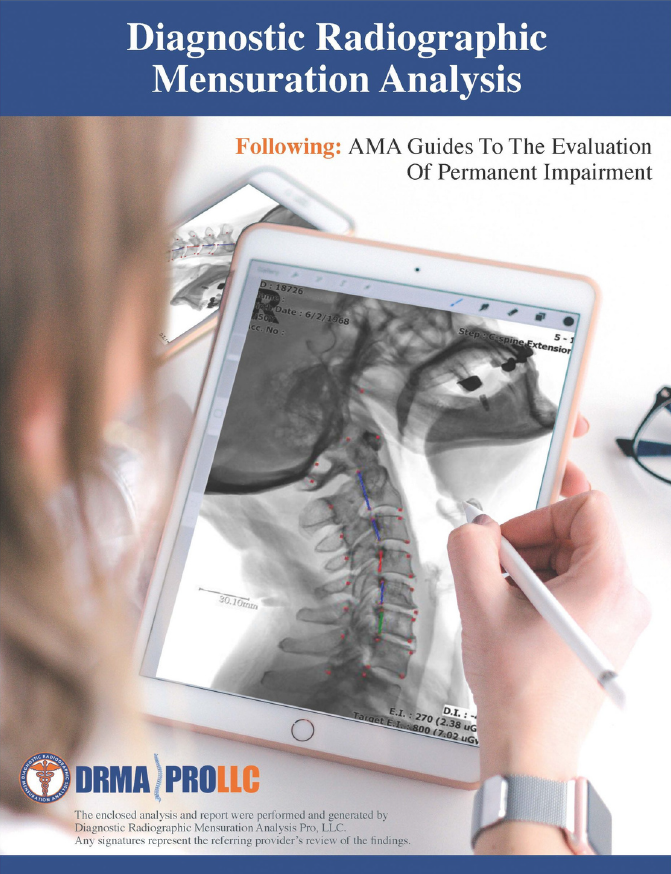
AOMSI Report
Ligament Injury Evaluation
A digitally measured report for anyone involved in a motor vehicle collision involving excessive movement of the head or low back.
How to Order
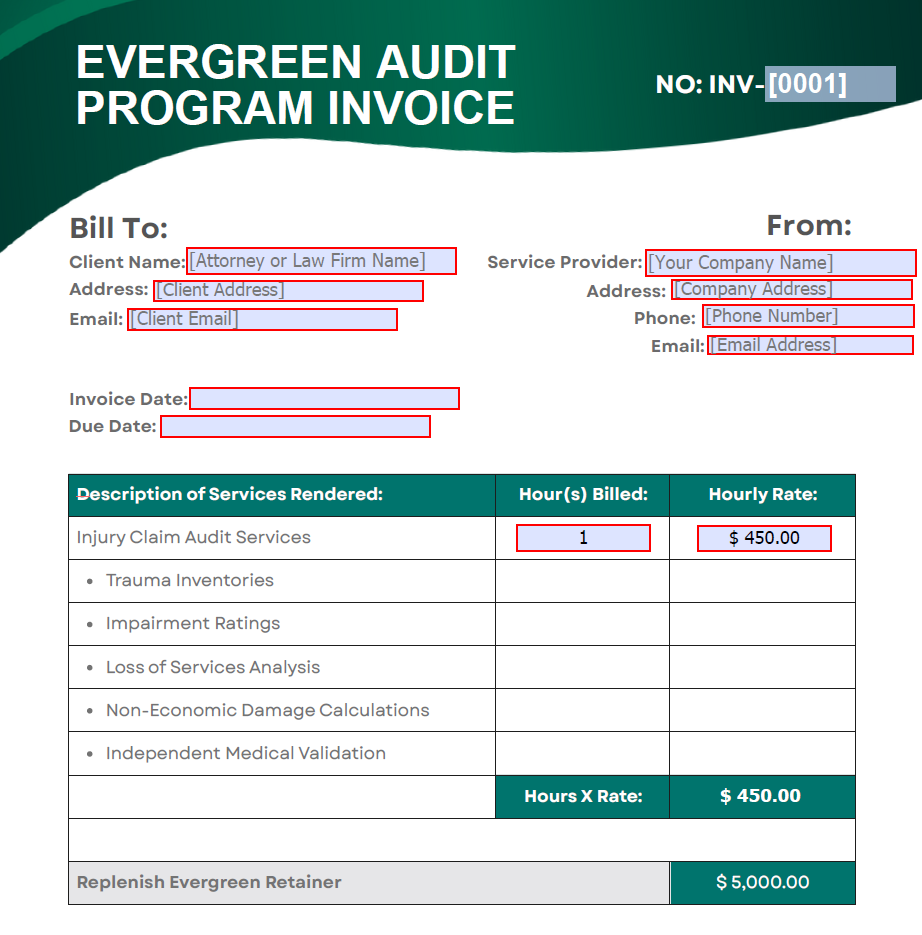
Evergreen Program
A-La-Carte $1,500 per report (demand letter or audit report)
on retainer $5,000 to start with billing by the hour at $450/hour
bulk orders over 20 reports prepaid at $1200 per report
What Attorneys Value
Audits support counsel with objective, reproducible analysis that strengthens demand packages and improves settlement posture.
★★★★★
“The audit clarified impairment and functional loss in a way that was easy to use in negotiation. It materially improved our valuation narrative.”

Plaintiff’s Counsel
Personal Injury Practice
★★★★★
“The chronology and admissibility framing helped us present the medical facts cleanly and defensibly—especially in a contested MIST file.”

Trial Attorney
Catastrophic & Soft-Tissue Claims
★★★★★
“The economics valuation tied clinical findings to damages in a way adjusters understood. It strengthened our demand and settlement position.”

Managing Partner
Plaintiff-Side Law Firm
Service FAQs
Common questions from firms evaluating a forensic audit engagement.
What do you need to start a case comparison?
A brief case summary, available medical records (or index), and the current demand/valuation posture. An audit will confirm scope and turnaround before engagement.
Do you work nationally?
Yes. Injury Audits supports plaintiff-side firms nationwide through secure, remote record review and reporting in the form of demand letters and court approved audits.
How is this different from a standard medical summary?
Audits focus on missed impairments, functional loss, and valuation-relevant clinical evidence—then present it with a reproducible methodology aligned with evidentiary scrutiny.
Are reports designed for Daubert/Frye challenges?
Our approach emphasizes objective, transparent methods and clear linkage between records, findings, and valuation—supporting admissibility review under FRE 701–702 and Daubert/Frye standards.
What is a typical turnaround time?
Turnaround depends on record volume and complexity, but most can be performed in under 5 days. After triage, our auditor will provide a timeline and deliverables schedule for your case.
Can you coordinate with treating providers or experts?
Audits provide targeted documentation requests and questions to support treating-provider clarification and expert alignment, as appropriate to scope.
Ready to strengthen your demand?
Turn Medical Records Into Defensible Case Value
Send your file (or share case files from Dropbox) for a focused comparison. We will identify undervaluation drivers, missed impairments, and the most persuasive clinical and economic support for damages.